


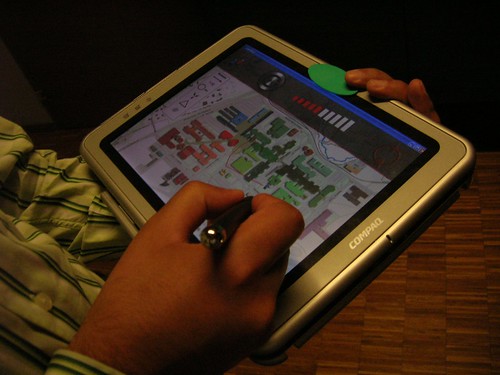
Much less than half a decade ago, the promise of Tablet PCs on the marketplace was a sign of the future. Even early models were impressive, regardless of their often underwhelming hardware specs--the draw was just the tablet form factor. Promises of sophisticated handwriting-recognition and standardized biometric security measures only added to the hype so what happened to the tablet computer system?
The answer is straightforward: the smart phone happened. Accurate, intelligent phones had existed prior to the tablet Computer, but the rise of the tablet Computer occurred in tandem with the rise of the much more user-friendly smartphone generation. The tablet was then competing with devices which at 1st glance may well appear to be selling to a totally numerous market, but when put side-by-side, similarities in between the two develop into apparent. The tablet Pc was developed to make a extra 'organic' computing knowledge, with handwriting and touch-features at the forefront of what the new hardware supplied. The new smartphone generation was also built about the concept of a more organic user encounter such as countless of the same characteristics as the tablets (writing/'touch' functionality on phones like the Treo and iPhone,) whilst offering additional intuitive UI's than their predecessors, and maintaining cost-points which produced them an appealing alternative to the Tablet computer. Normal laptops would nonetheless retain their share of the market place, as the will need for higher-finish computing energy in a portable form stayed the same, but for the less-powerful tablet Pc, the much more sleeker, smaller smartphone would spell its demise.
Tablet PC's nonetheless exist thanks to a smaller niche market place, cornered by organizations like Asus and Toshiba, but they by no means saw the wide success they could have seen if it weren't for the advancement of phone-technologies. The tablet was simply too little too late.

0 comments:
Post a Comment